
What the Next Team Needs to Know
Structured data boundaries that eliminate context leakage during shift transitions.
Explore practical scenarios for transferring tasks, sharing project context, documenting unfinished work, and coordinating teams across working hours.

Six practical sections covering the full asynchronous responsibility transfer cycle.
Select the operational friction point your distributed workspace experiences most frequently to generate an asynchronous transfer playbook.
Eliminate synchronous morning unblocking sessions by deploying standardized end-of-day contextual digests that specify immediate next steps, unmerged code paths, and verified state dependencies.
"Will writing daily structured handoffs slow down our active development speed?"
A distributed product agency operating across San Francisco, London, and Tokyo removed 95% of timezone-related delay by standardizing task transfer protocols.
Explore how structured context serialization eliminates operational drift, blocks knowledge loss, and keeps global engineering teams aligned across disparate time zones.
| Operational Dimension | Typical Ad-Hoc Approach |
HandoffHour PlaybookRecommended
|
|---|---|---|
| Dimension:Context Capture & Storage | Typical Approach:Fragmented Slack threads, unindexed direct messages, and mental notes that vanish when individual contributors log off. | HandoffHour:Atomic state serialization into structured patterns with explicit next-step owners, dependencies, and reproducible artifacts. |
| Dimension:Time Zone Overlap Dependency | Typical Approach:Mandatory late-night or early-morning sync calls to explain work in progress, draining energy and causing scheduling bottlenecks. | HandoffHour:Zero synchronous overlap requirement. Standardized status summaries empower incoming shifts to start instantly without waiting. |
| Dimension:Accountability & Task Ownership | Typical Approach:Ambiguous responsibilities during shift changes resulting in dropped tickets, duplicate effort, and stagnant workflows. | HandoffHour:Explicit ownership state transitions with deterministic check-offs, blocker escalation routes, and clear handoff boundaries. |
| Dimension:Onboarding & Knowledge Reuse | Typical Approach:Oral history and shadowing where newcomers spend weeks decoding disjointed chat histories and unwritten conventions. | HandoffHour:Searchable repository of context transfer patterns and real scenario runbooks accessible to the entire organization. |
Concrete operational shifts recorded by distributed teams running standard handoff protocols.
Incoming teams start active execution immediately using structured state definitions, removing delayed query cycles across sleeping regions.
Structured async handover logs replace midnight sync calls and early-morning status checks, protecting individual focus and core working hours.
Clear acceptance protocols ensure every open ticket has a confirmed single owner across rotational handoffs, eliminating orphan work.
Predefined severity criteria determine exactly when to route urgent items asynchronously versus initiating on-call contact across time zones.
Micro-decisions, temporary workarounds, and blocker statuses are captured in standardized log entries instead of ephemeral direct messages.
Engineering, support, and product teams use unified handoff structures to coordinate handoffs without tool friction or fragmented threads.
Cross-regional teams suffered from an average 14-hour communication lag, blocked pull requests overnight, and conflicting parallel database migrations across remote hubs.
Eliminated ad-hoc chat pings by implementing a rigid 5-phase asynchronous handoff cycle with standardized structured status logs and explicit state transfers.
Cycle times dropped drastically while incoming engineers achieved instant workflow continuation without requiring real-time overlap meetings or clarifications.
Execution workflow deployed across daily zone rotations.
Incoming engineer reviews immutable shift logs, checks CI/CD status, and confirms task lock-in.
Active execution with self-documenting commits, architectural notes, and blocker flagging in repo.
Drafting 3-bullet core update: deliverables finished, decisions made, and unresolved risks identified.
Explicit ticket reassignment, branch linking, and environment credential verification handover.
Following time zone picks up active context instantly without synchronous onboarding delay.

The systematic protocol created from this enterprise case study is now formalized into our documented framework, providing turnkey checklists, decision trees, and handoff playbooks.
Documented productivity and context continuity results from distributed engineering, operations, and support organizations.
“Before adopting standard handoff briefs, our incoming EMEA support leads spent 45 minutes clarifying active escalation tickets with the departing APAC shift. The structured log completely eliminated exploratory inquiries.”
“Our North American backend engineers previously waited for Singapore morning standups to resolve branch merge conflicts. Codifying context transition checklists unlocked continuous code delivery cycles.”
“By establishing clear protocol matrices between product and release management, the handover overhead dropped from over 90 minutes of scattered messages to an 18-minute comprehensive async review.”
Explore verified case analyses and structured handoff blueprints for cross-timezone organizations.
Structured data boundaries that eliminate context leakage during shift transitions.

Preventing execution stall when ongoing ownership rotates between distant hubs.
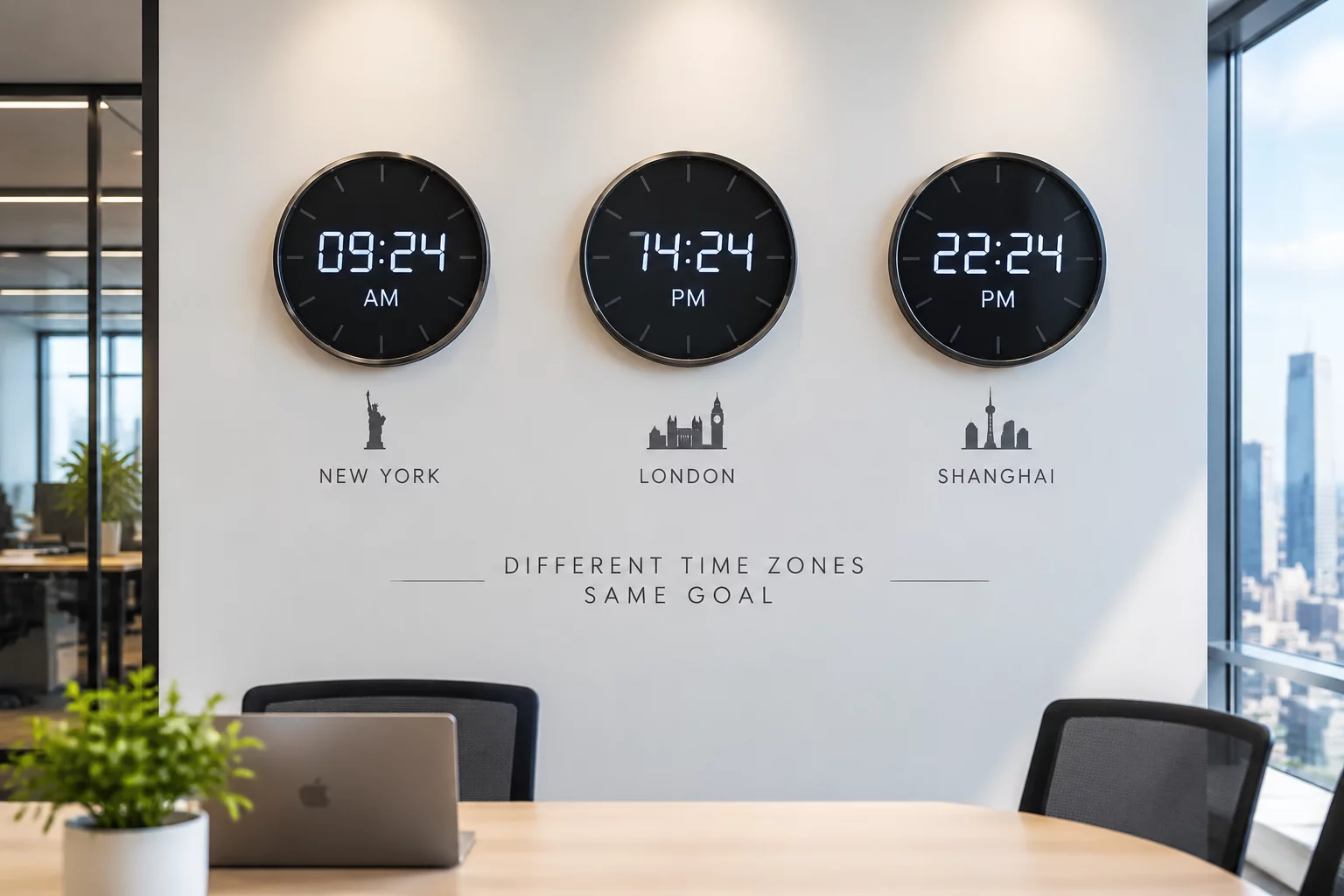
Triangular dispatch cadence designed to prevent communication debt across continents.

Standardized summaries enabling immediate next-day momentum without verbal meetings.