Why Standardized End-of-Day Status Updates Matter
Distributed and asynchronous teams frequently struggle with fragmented end-of-day updates. When engineers or project managers log off without a clear log of what completed, what stalled, and what needs immediate attention, the incoming shift spends valuable morning hours piecing together context from disparate commit logs and chat threads.
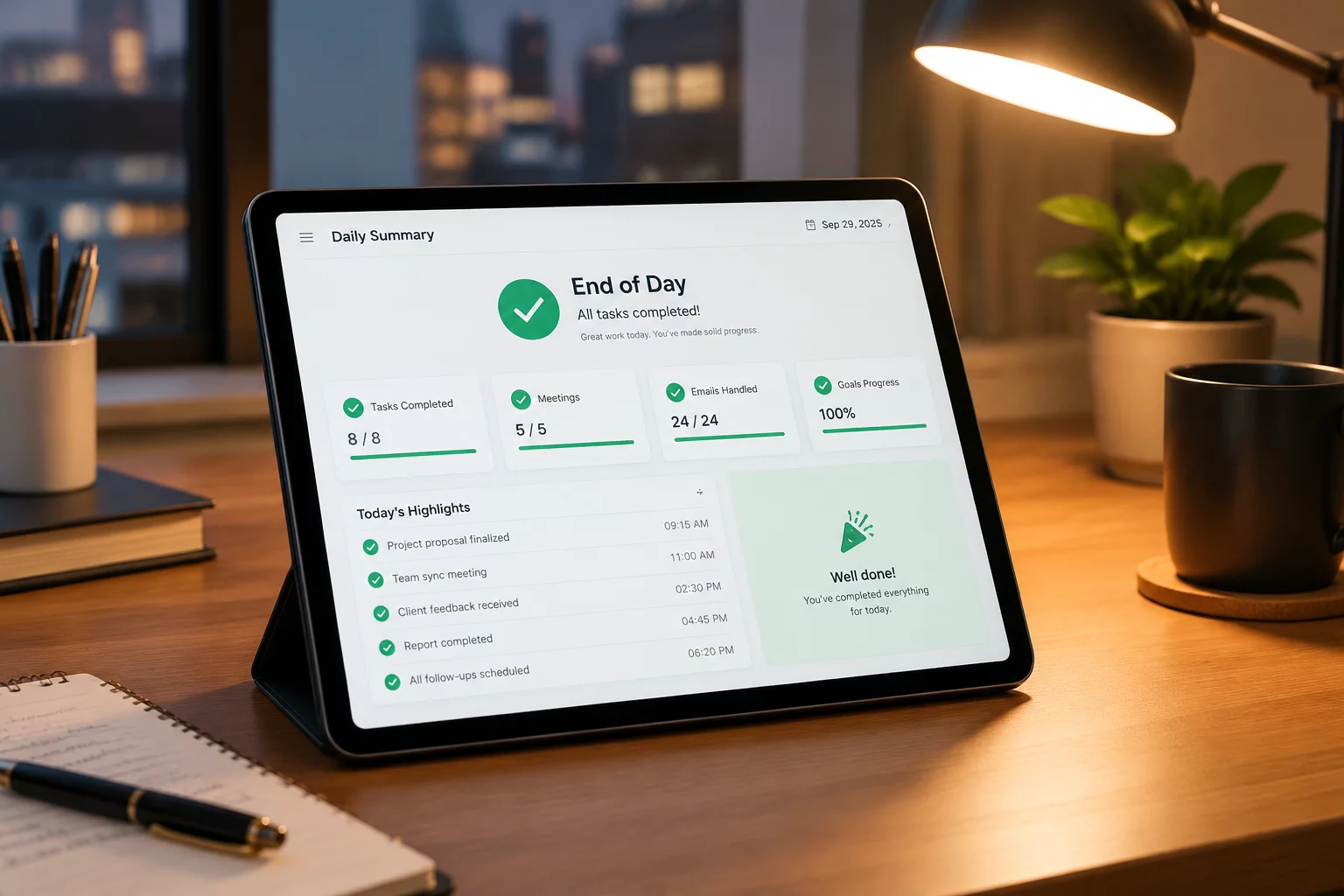
The End of Day Status Pattern establishes a predictable five-point data structure. Rather than writing arbitrary narrative paragraphs, team members publish an atomic summary capturing merged deliverables, in-flight work, exact roadblock details, and pending reviewer tags. This standard guarantees that collaborators starting their day in other time zones possess everything required to pick up work instantly.
Eliminate morning ambiguity by ensuring every teammate leaving the desk leaves an indisputable operational snapshot for whoever opens the board next.
Key Components of the Status Protocol
To maintain brevity while preserving critical depth, every status post follows a concise structural checklist:
- Completed items linked directly to pull requests, task tickets, or deployed staging environments.
- In-progress tasks with current state branch names and anticipated remaining effort.
- Explicit blocker alerts specifying external dependencies, waiting reviews, or environment outages.
- Tagged follow-up owners for overnight actions with unambiguous priority tiers.
Adhering strictly to these four pillars prevents cognitive overload. Reading a standardized post takes under sixty seconds, yet answers all critical operational questions without requiring synchronous alignment meetings.
Never post a blocker without explicitly mentioning who owns the resolution and what exact prerequisite is currently missing.
Integrating the Pattern into Asynchronous Workflows
Successful adoption relies on embedding this pattern into automated workflows. Teams configure designated channels such as #team-sync or automated Slack bots that trigger a gentle reminder thirty minutes prior to typical log-off hours. Posts are grouped under daily threads to keep the main channel clean and searchable.
Over time, the aggregated end-of-day updates build a searchable audit log of sprint velocity and systemic friction points. Management can quickly spot chronic bottlenecks, while individual contributors enjoy uninterrupted deep work during their active hours.
Ready to deploy this pattern in your organization?
Contact our asynchronous operations team to adapt handoff patterns to your specific tooling and schedule.