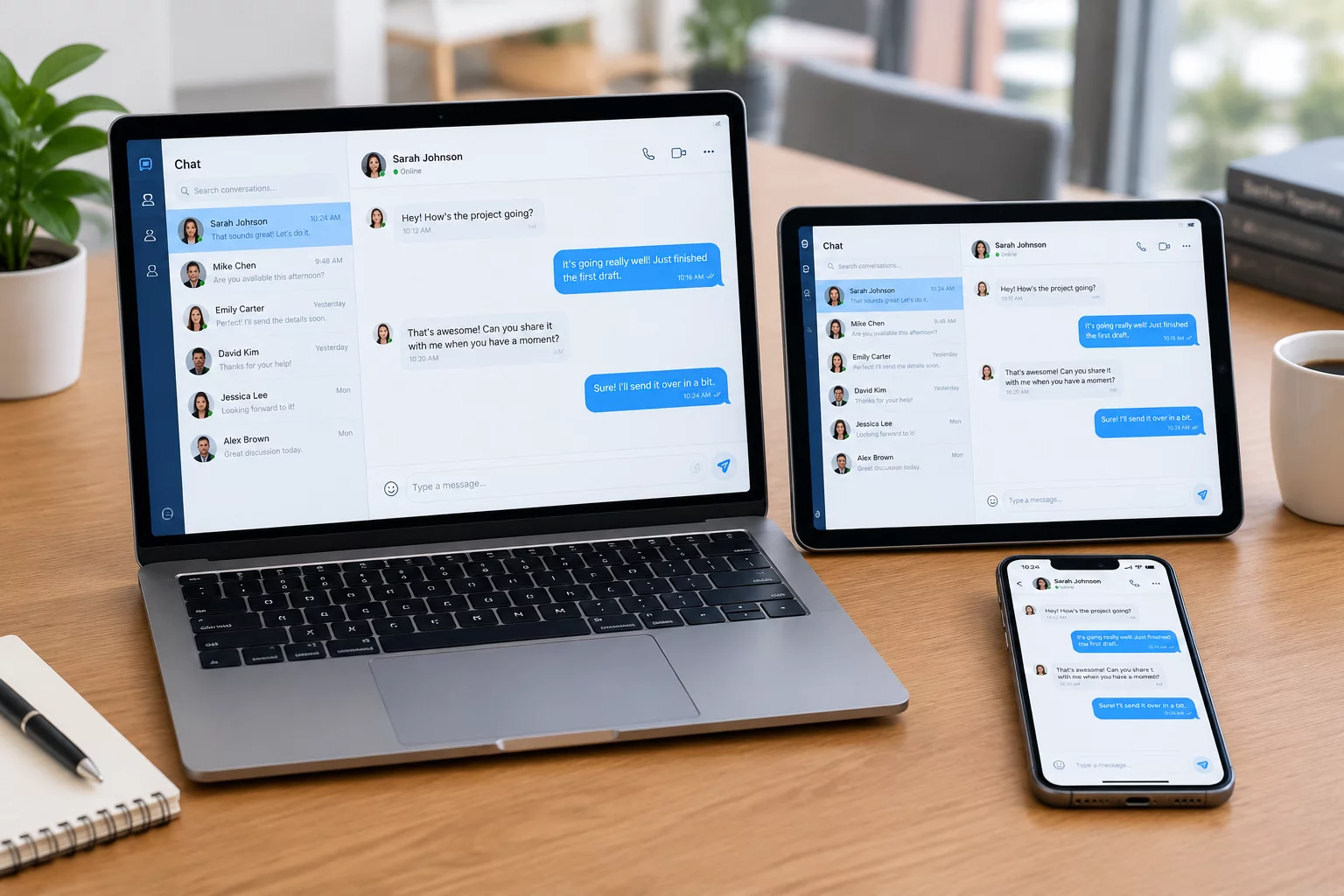
The Breaking Point of Unstructured Chat
Rapid team expansion from 12 to 42 remote specialists pushed early communication habits beyond their practical limits. Engineers in San Francisco, product managers in London, and backend teams in Bucharest relied on informal Slack direct messages to sync on active product initiatives. Without clear ownership boundaries or structured handoff summaries, critical architecture decisions vanished into unstructured message streams, forcing engineers to wait hours for basic clarification.
Urgent questions routinely interrupted off-shift team members, creating burnout and breaking daily deep-work cycles. Morning standup video calls turned into disjointed status rundowns where half the team listened to updates completely irrelevant to their immediate priorities.
Real-time chat feels fast in the moment, but unstructured conversations actually slow distributed teams down by scattering decisions across private channels and disappearing threads.
Implementing Structured Transfer Protocols
The operational leadership introduced standardized context transfers anchored around predictable handoff windows. Rather than requiring synchronized standup calls, each pod established dedicated handoff channels with clear expectations:
- End-of-shift status logs outlining completed commits, pending pull request approvals, and current blockers.
- Mandatory context packets attached to any task transitioning across continental time zones.
- Strict definition of asynchronous non-urgent questions versus true incident escalations.
- Shift from private Slack DMs to searchable public project threads for architectural decisions.
By formalizing what incoming engineers should see at 08:00 local time, incoming team members resumed work within ten minutes of logging on without waiting for remote teammates to wake up.
Cycle times for multi-timezone pull requests dropped from 38 hours to 9 hours within five weeks of enforcing written handoff summaries.
Cultural Shift and Long-Term Stability
Transitioning away from reactive pinging required an intentional cultural pivot toward documentation hygiene. Engineers began treating handover notes as first-class deliverables rather than administrative chores. As a direct consequence, onboarding timelines for new hires decreased significantly because operational context remained accessible in structured logs instead of living solely in tribal memory.
The startup demonstrated that high-speed execution does not require around-the-clock availability. Clear handoff rules provided predictable boundaries, enabling focused engineering stretches during daylight hours and stress-free disconnection after shift completion.
Need a tailored handover system?
Explore our practical frameworks or reach out to adapt our async transfer routines to your team structure.